
Description
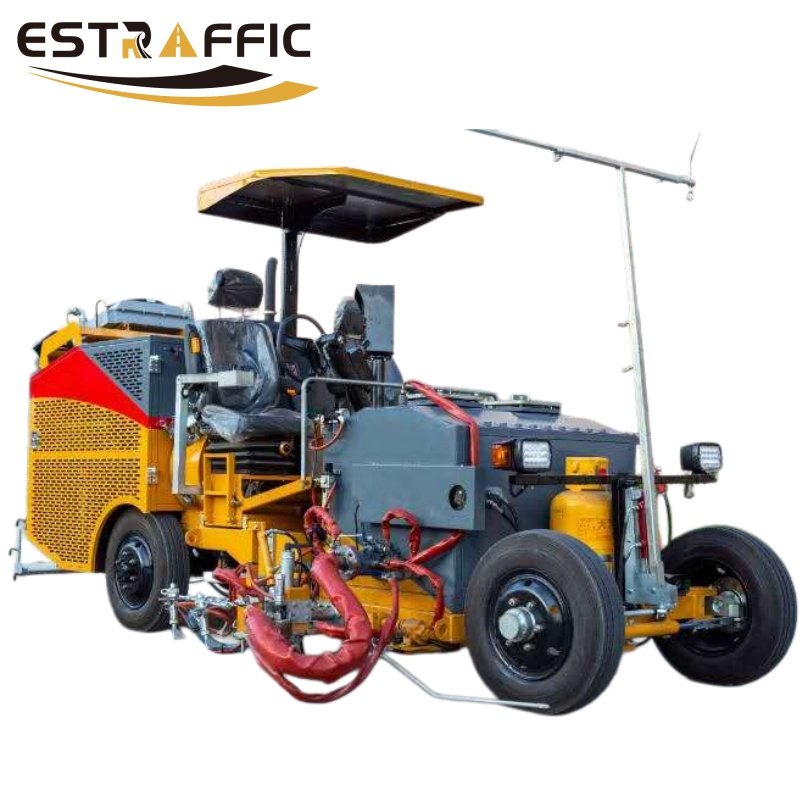
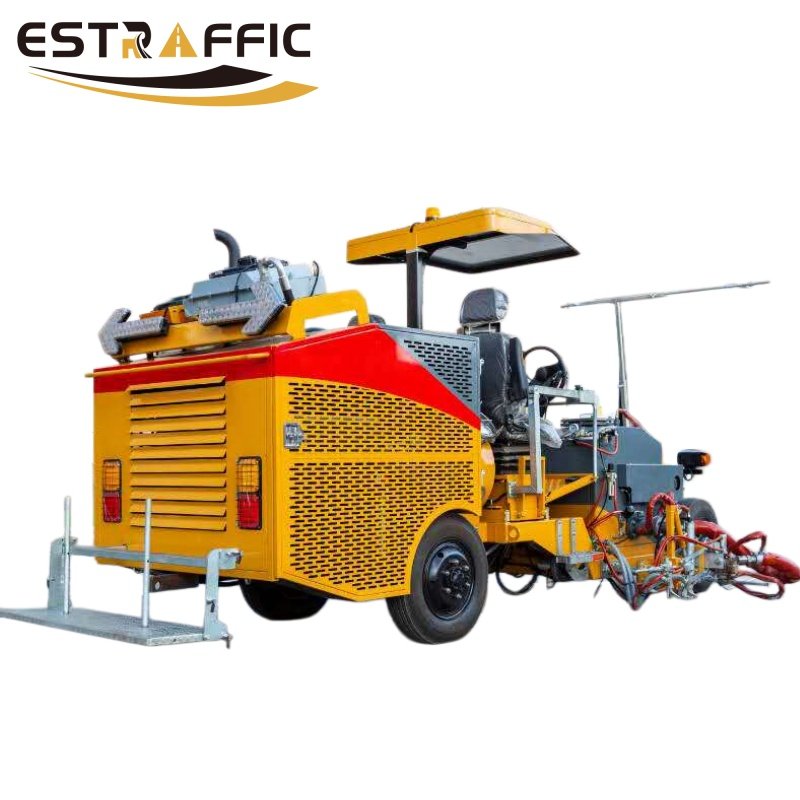
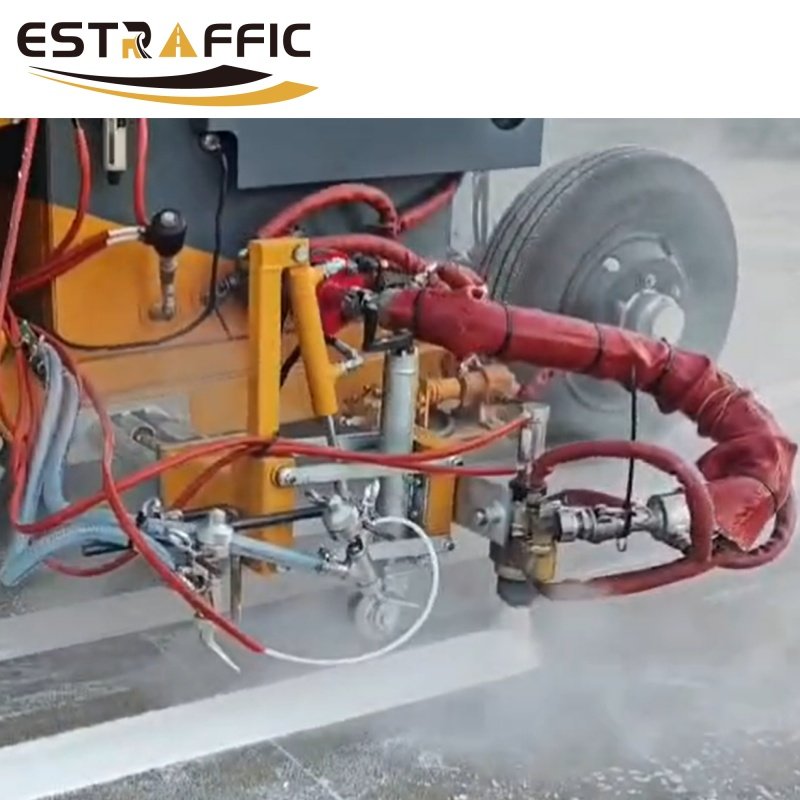
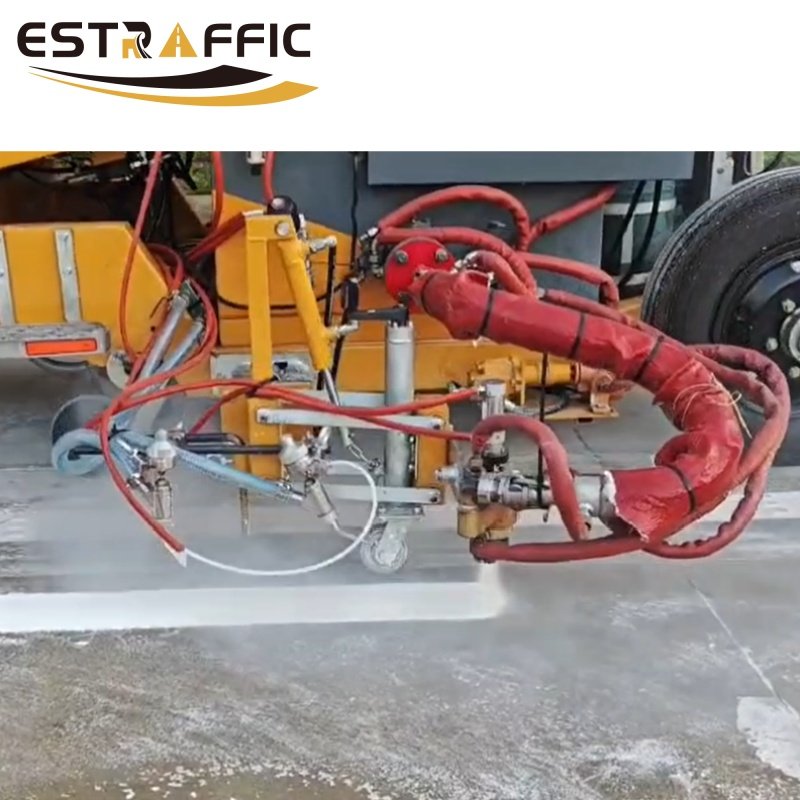
Thermoplastic spraying road marking machine uses air compressor, low-pressure air-assisted to atomize and spray the liquid hot-melt material onto the road surface.
The suspended spraying head operates smoothly over gravel, rough concrete, and existing double-line markings without snagging; Ensures uniform thickness when overlaying old lines, preventing edge buildup or burrs.
Technical Parameter
Power | 73.9kw |
Maximum | 1.0MPa |
Rated Air Pressure | 0.8MPa |
Working | 0.6~1Mpa |
Atomizing Air Pressure | 0.25-0.35Mpa |
Paint | 0.2-0.3Mpa |
Paint Can Capacity | 400L |
Glass | 2X90L |
Method of Spreading Glass Beads | Pneumatic |
Walking | Forward: |
Maximum Gradeability | 11° |
Spraying | Spray |
Spraying Thickness | 1.5~2.5mm |
Spraying | 100-300mm(Adjustable) |
Heating Temperature | 0~230°C |
Heating | Thermal |
Applicable Fuel | Diesel |
Driving | Hydrostatic |
Overall Size | 5270X2200X2550mm |
Total | 3600Kg |
Advantages
- High Efficiency: Hot-melt spray marking is characterized by its high efficiency. This method requires significant paint spraying pressure, resulting in a high ejection velocity for the paint material. Consequently, both the movement speed of the spray gun and the material feeding rate are accelerated, leading to a rapid overall spraying speed and, therefore, high operational efficiency.
- Excellent Durability: Hot-melt spray marking offers superior durability. The high-pressure atomization of the hot-melt material imparts powerful kinetic energy to the paint particles. These particles are driven deep into the pores and crevices of the road surface, resulting in a denser coating structure. This enhances the mechanical interlocking effect with the pavement and improves adhesion, thereby effectively extending the service life of the marking coating. This, in turn, reduces costs associated with equipment, raw materials, and labor.
- Rapid Coverage of Existing Markings: Hot-melt spray marking features the ability to quickly and effectively cover old road markings. Typically, during secondary marking operations, the uneven surface of existing hot-melt lines poses a significant challenge for “screed-type” marking machines; because the hot-melt hopper on such machines travels in direct contact with the ground, existing markings must be completely removed prior to secondary application to avoid compromising construction quality and progress. In contrast, with hot-melt spray marking, the spray gun is positioned above the ground; this allows the new marking to be applied directly over—and effectively cover—the old line without being hindered by its presence.
- Adjustable Line Thickness: The thickness of the marking line applied via hot-melt spraying can be freely adjusted. By utilizing a hot-melt spray gun, operators can control the flow rate of the molten material—and thus the thickness of the resulting line—by regulating the discharge pressure and the machine’s travel speed. This adjustment process is both simple and convenient.
- Adjustable Line Width: The width of the marking line applied via hot-melt spraying can also be freely adjusted. Much like conventional cold-paint marking machines, the line width can be altered by simply adjusting the height of the spray gun relative to the ground. This overcomes a major drawback of standard screed-type hot-melt marking machines, which typically require the physical replacement of the material hopper in order to change the width of the applied line.


Reviews
There are no reviews yet.